THE EDIT · FAMILY, CREATIVITY & PLAY
The Surprising Benefits of Building Blocks for Kids, Teens & Adults
A little pile of bricks can become a big idea.
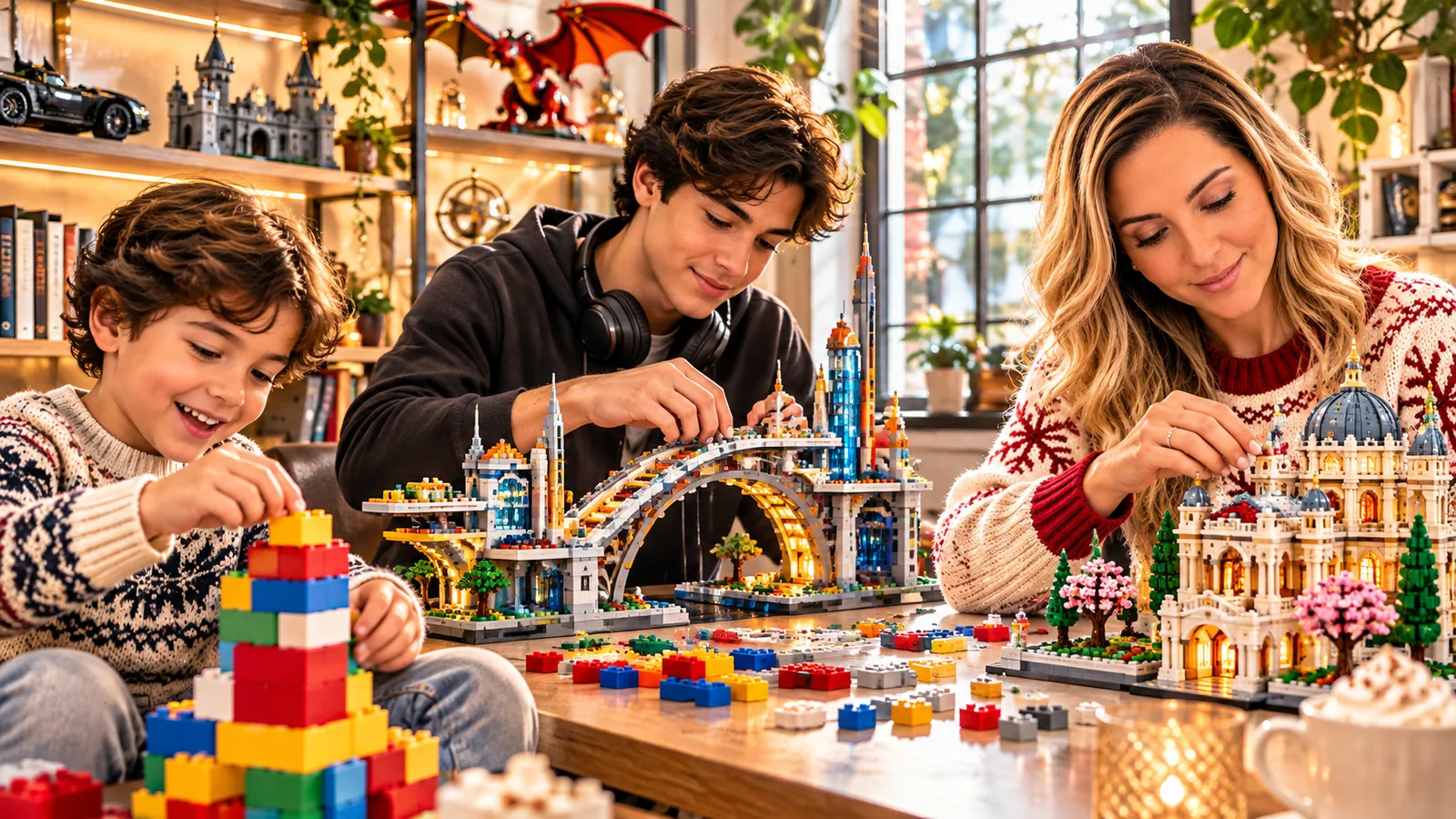
A child builds a tower. It falls. He laughs and starts again.
A teenager spends two hours perfecting the bridge of a fantasy city.
An adult sits down to assemble a detailed model and suddenly realizes the evening has disappeared.
Three different ages. One strangely satisfying little sound: click.
Maybe it is not just the finished castle, rocket or colorful tower that keeps people coming back. Maybe it is the experience of figuring out what to do with the next piece.
Building blocks give us a delightful way to experiment with shapes, make choices, solve small design problems and share stories. Research suggests construction play can support certain spatial and early learning skills in children, but the details matter—and there is no need to turn every playful moment into homework.
What Do Building Blocks Actually Help You Practice?
Spatial Thinking: Seeing the Possibilities
When someone imagines how a flat piece becomes part of a three-dimensional object, rotates a brick to fit, or changes a structure that won’t balance, they are using spatial thinking.
Researchers have linked children’s construction skills with spatial abilities and some mathematical measures. A 2026 study of preschoolers, for example, found that children with stronger informal and formal spatial skills made larger and more complex block structures. That is a relationship, not proof that one toy automatically changes a child’s abilities.
The OECD identifies spatial play with blocks as a promising way to engage children in basic engineering ideas, including stability, shape, size and part-to-whole relationships.
Try this: Ask, “What could make the bridge stronger?” Then let the builder test their own answer.
Research notes: Gold et al. (2026) · OECD: spatial play and STEM learning.

Concentration: One Piece at a Time
Following instructions, searching for a piece, correcting a mistake and returning to a project all involve sustained engagement.
The American Academy of Pediatrics includes tabletop building and puzzles among playful activities that help children practice attention and problem solving. But a building set is not a treatment for attention disorders, and not everyone enjoys concentrating in the same way.
Try this: Build in short sessions that fit the person’s interest rather than setting an arbitrary timer to “train the brain.”
Related guidance: American Academy of Pediatrics: life skills through play.
Creativity: From Instructions to Imagination
Instructions can be satisfying, especially for an ambitious model. Open-ended play brings a different pleasure: there is no official right answer.
What if the spaceship needs a garden? What if the castle has a secret library? What if the tower is supposed to lean?
Those tiny questions invite storytelling, experimentation and original design. A child may invent a new world; a teen may redesign a mechanical idea; an adult may create something beautiful simply because it feels good to make it.


Why Building Changes With Age
For Younger Children: Play Is the Project
For little builders, stacking, sorting, connecting and rebuilding can be more interesting than copying a finished model. Large, age-appropriate blocks give children a chance to explore colors, sizes, balance and stories through their hands.
A tower falling is not necessarily a failure. It is new information. The grown-up’s role can be as simple as asking, “What happened?” rather than immediately rebuilding it for them.
Choose toys appropriate for the child’s age and abilities. Small parts may be choking hazards for younger children, and product safety warnings should always be followed.
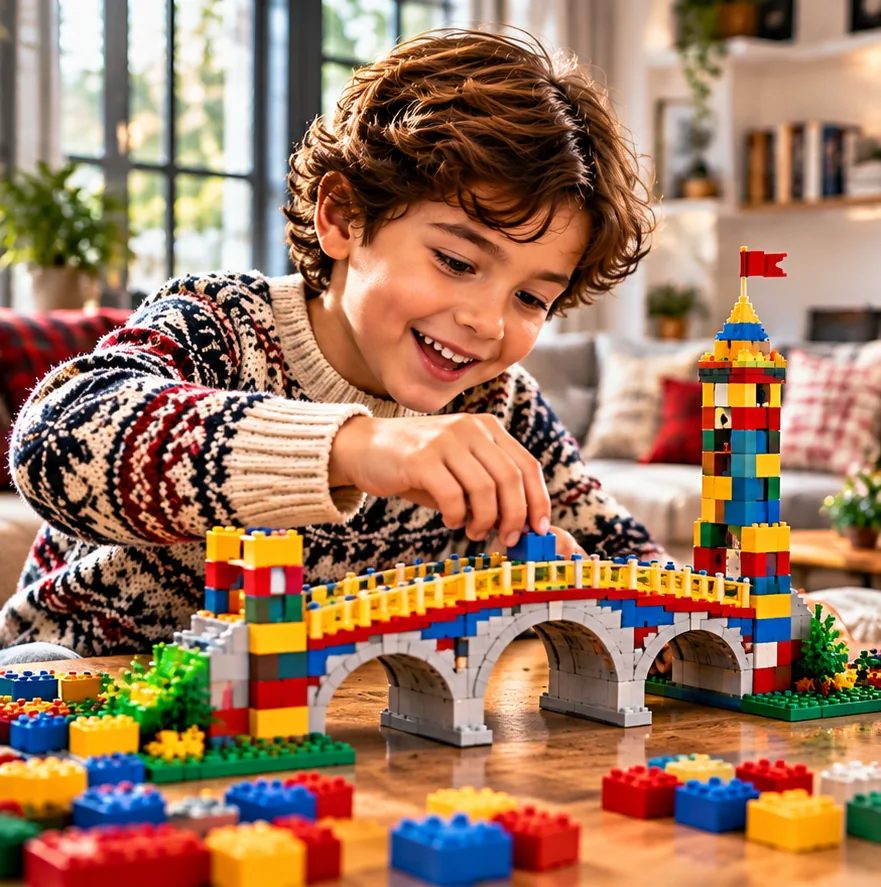
For Teens: Give Them a Design Challenge
Teenagers who enjoy construction can work on more complex goals: invent a movie set, build a model city, design a vehicle or create a structure that must support a particular weight.
A good challenge leaves room for decisions: Do we need a stronger base? Can we use fewer parts? Could we build it another way?
Building with friends can also make space for teamwork and negotiation. These are opportunities to practice design and collaboration, not proof that every construction kit raises grades or guarantees engineering skills.
Try this: Turn a favorite fictional world into a miniature set, then ask the teen to explain the cleverest feature of their design.
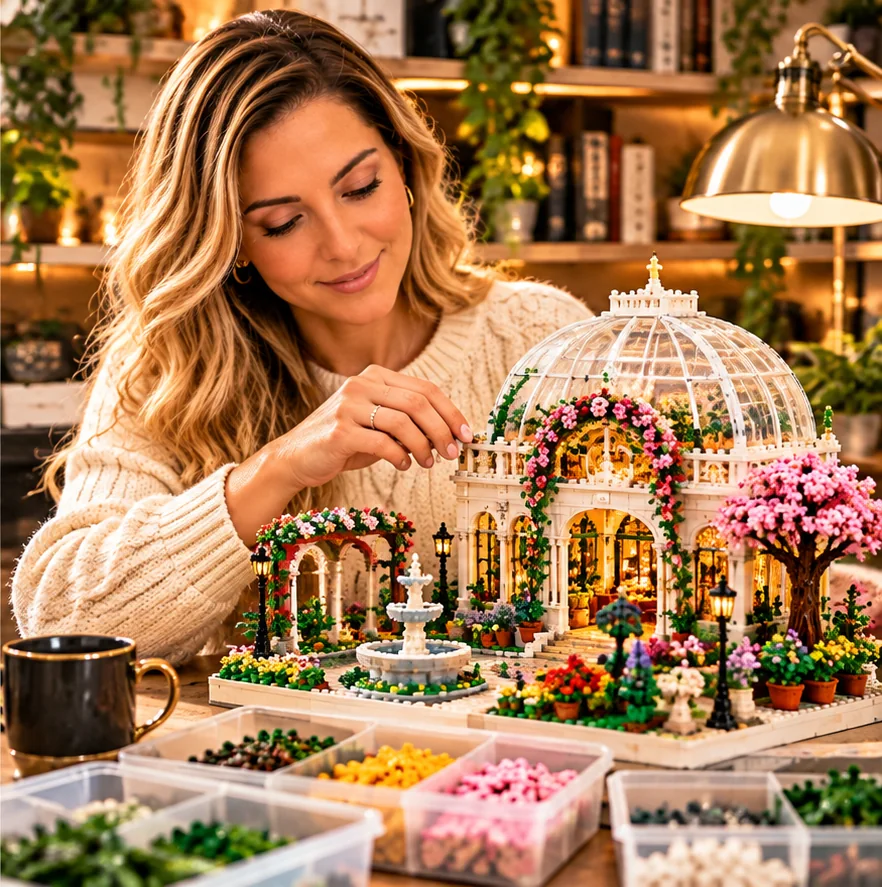
For Adults: The Joy of Making Something Slowly
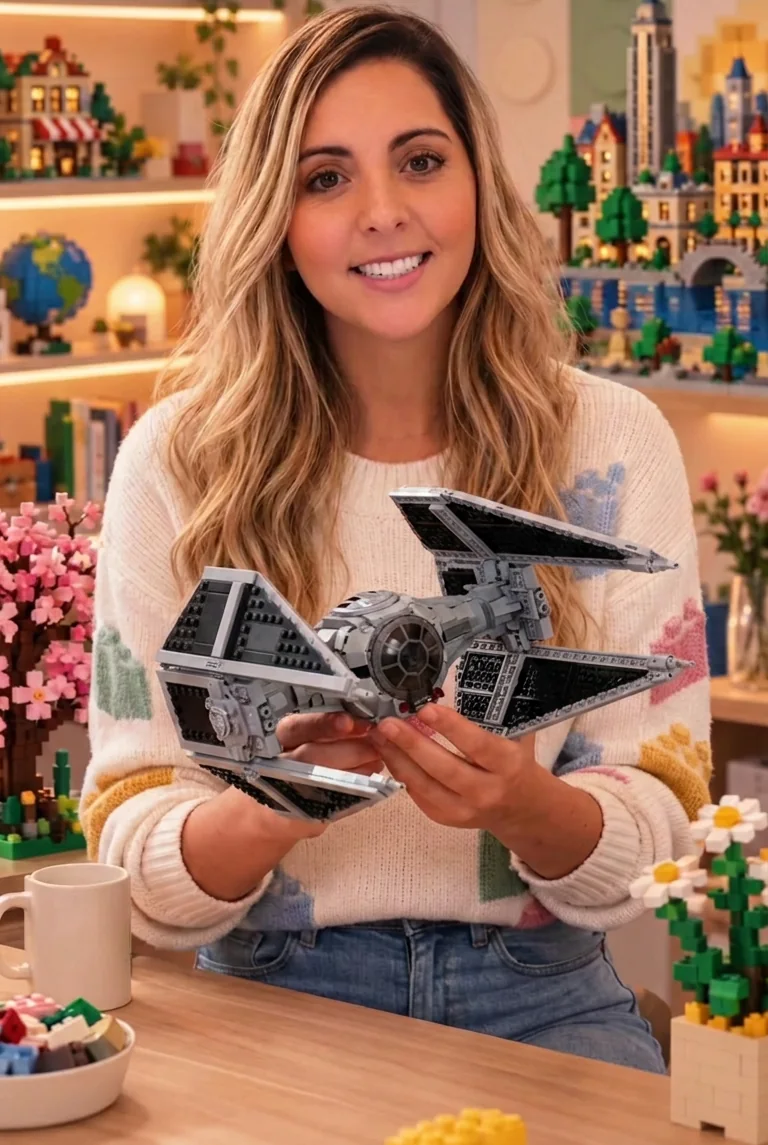
You can be a full-grown adult, have a calendar filled with responsibilities and still feel absurdly happy finding the one missing piece.
Detailed builds may offer a welcome break from screen-heavy routines for people who enjoy hands-on creative hobbies. University of Arizona psychology experts have described creative play as one way to shift perspective and get out of a mental rut.
That makes building a possible leisure activity—not a medical promise or a replacement for mental health care. Some adults find complex sets calming; others find them frustrating, and both reactions are perfectly normal.
Try this: Set up a comfortable corner, pick a project you actually like, and enjoy building without needing to finish it in one sitting.
Expert commentary: University of Arizona on creative play for adults.
The Family Challenge: What Happens When Everyone Builds Together?
Place one pile of blocks on the table and ask everyone to create a bridge, a city or a dream house.
One person will be the planner. Another will insist on a purple roof. Someone will appoint themselves chief structural engineer. Someone else will quietly build a coffee shop for the castle.
The funniest part might be how much conversation happens without anybody needing to look at a screen.
The American Academy of Pediatrics emphasizes that playful interactions with caregivers and peers can support young children’s social development and relationships. When adults join in, the shared attention and conversation are part of what makes play valuable.
Related reading: The Power of Play — American Academy of Pediatrics.
Try Our 20-Minute Building Challenge
- Choose a theme: bridge, tower, tiny room, futuristic garden or favorite story world.
- Give every builder a handful of pieces and a role—or let everyone improvise.
- Build for ten minutes. Then test stability, symmetry or storytelling details.
- Make one adjustment after something goes wrong.
- Show each other what you made. Ask about the most surprising decision, not just the finished look.
A little friendly competition is optional. Imagination is required.
Does Research Prove Building Blocks Make You Smarter?
Not exactly—and that is an important distinction.
An experimental study with 198 children aged seven to nine found some improvements after construction training, but benefits beyond the practiced activity were limited. Another study of 634 children found that simply reporting more frequent construction play was not associated with better spatial or mathematics outcomes.
That does not make building pointless. It reminds us that play is a rich experience, and that age, activity design, social interaction and the skills being measured all matter.
We can appreciate construction toys for what they offer without promising a shortcut to higher IQ, better grades or clinical treatment.
Original studies: construction training with 198 children · construction-play frequency in 634 children.
Choosing Building Sets for Different Interests
For hands-on beginners: Look for larger, simpler pieces and designs that invite free play.
For imaginative storytellers: Consider open-ended colorful collections, scenes or characters.
For teenage makers: Try models with interesting engineering, architecture or design challenges.
For adult hobbyists: Think about display space, complexity, interests and whether they like to follow instructions or invent.
For collectors: Confirm the exact theme, edition and model before choosing a gift. Duplicates happen.
One thoughtful collection to explore at Epic Stash Studio is our Harry Potter Collector Bedroom Look, which includes an identified Hogwarts Icons building set in the approved catalog. We will add other Build Worlds destinations only after their product identities, links and images are verified.
Frequently Asked Questions
Do building blocks help kids learn?
They can create opportunities to practice spatial reasoning, problem solving, storytelling and collaboration. Research supports some connections to early math and spatial skills, but not every possible benefit is guaranteed for every child.
Can building toys improve concentration?
Construction activities can encourage sustained attention during an interesting task, and pediatric guidance highlights building and puzzles as ways to practice attention. That does not make them an ADHD treatment.
Are building blocks good for teenagers?
They can be appealing for design, storytelling, model-making and creative collaboration. Choose the challenge by the teen’s interests and experience, not an assumption that they have outgrown play.
Why do adults enjoy building sets?
Some enjoy a creative hobby, the satisfaction of following a complex process, a favorite fictional universe or a display-worthy finished object. It is a personal leisure preference, not a universal psychological outcome.
Is following instructions or building freely better?
Both can be enjoyable. Guided sets involve sequencing and visual interpretation; free building offers choices and improvisation. Try both and see what makes the builder curious.
The Final Piece
The next time you see someone leaning over a table of tiny colored pieces, remember: the finished model is only part of the story.
There is the moment they rethink a bridge, the laugh when a tower falls, the pride when two ideas finally connect—and sometimes the simple pleasure of spending an afternoon together.
Maybe the best thing these little blocks build is not a castle at all. Maybe it is a reason to keep imagining.
Love it? Found it! Discover more creative building inspiration at Epic Stash Studio.
Affiliate disclosure: This article may contain affiliate links. As an Amazon Associate, Epic Stash Studio earns from qualifying purchases.